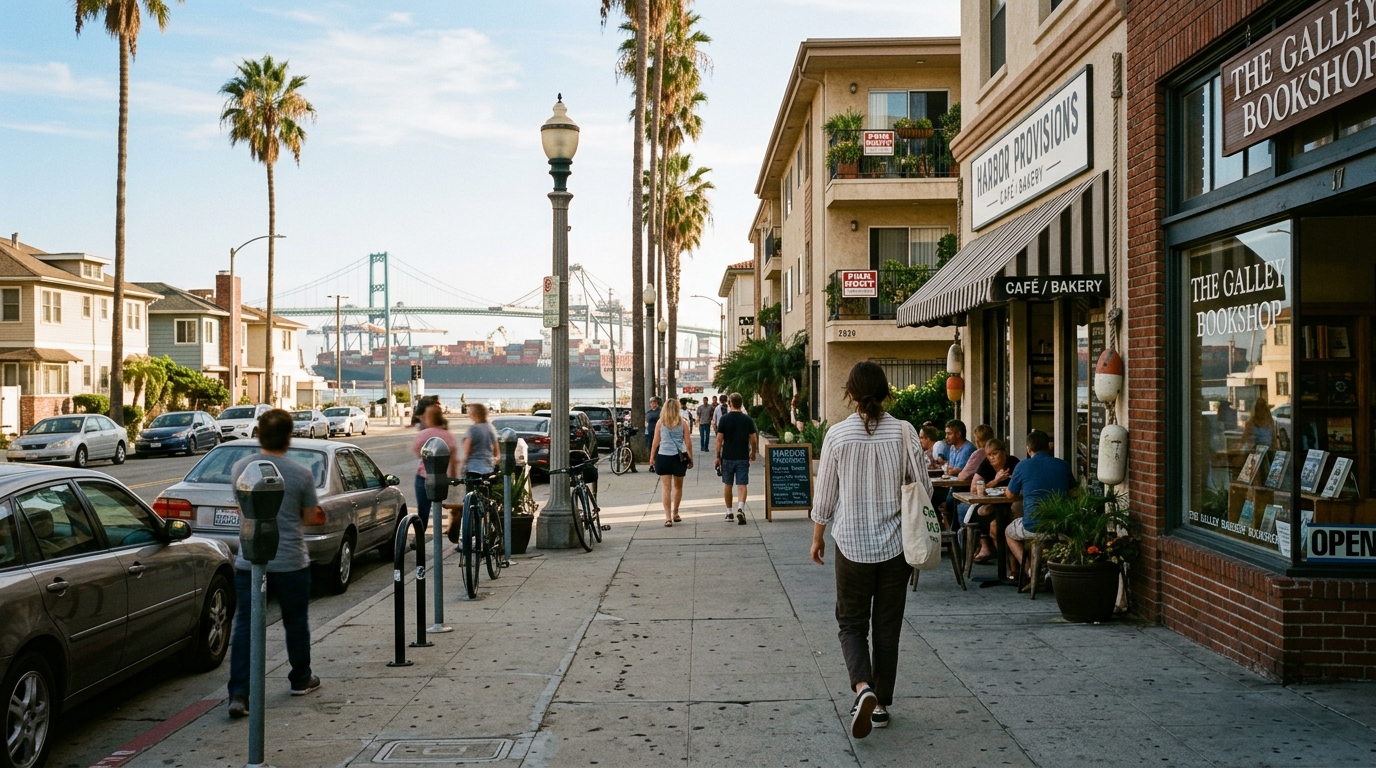
San Pedro is one of Los Angeles’ most distinctive coastal neighborhoods.
It has ocean air, harbor views, local history, independent businesses, and a downtown core that feels different from the rest of LA. It also has real trade-offs, including port activity, commute planning, and block-by-block neighborhood differences.
For renters comparing coastal living in Los Angeles, San Pedro can feel like a practical alternative to higher-priced beach areas. It offers access to the waterfront without the same Westside beach-city pace or pricing.
If you are hunting for a blend of coastal air and urban convenience, exploring elevated rental living in Downtown San Pedro can place you near restaurants, local culture, and the growing LA Waterfront.
Quick Answer: Is San Pedro a Good Place to Live?
Yes, San Pedro can be a good place to live if you want coastal character, a walkable downtown, local dining, waterfront access, and a more grounded Los Angeles neighborhood feel. It is especially appealing for renters who want ocean air and historic charm without the higher costs often found in Westside beach cities. However, living in San Pedro also means planning around the Port of Los Angeles, truck routes, freeway commutes, and parking differences by block. The best fit depends on your commute, lifestyle, budget, and preferred neighborhood pocket.
The Pros of Living in San Pedro, CA
San Pedro has a strong sense of place.
It is not a polished beach resort town, and that is part of its appeal. The neighborhood blends working-port history, coastal access, arts culture, and newer apartment development.
For many renters, the biggest pros are lifestyle, value, and local character.
Coastal Living With a More Practical Price Point
One of the main reasons renters consider San Pedro is the coastal discount.
Compared with many Westside beach-city markets, San Pedro often offers lower rental costs while still keeping renters close to the Pacific Ocean. Exact savings vary by unit type, building age, amenities, and current availability, but the area can be meaningfully less expensive than places like Santa Monica or Manhattan Beach.
That matters if you want ocean access without stretching your budget too far.
San Pedro may appeal to renters who want:
- Coastal air: The neighborhood sits along the LA Waterfront.
- More space for the price: Renters may find better value compared with some beach-city markets.
- Local character: The area feels rooted, lived-in, and less generic.
- Access to outdoor escapes: Parks, beaches, and bluff-top walks are nearby.
- Downtown convenience: Restaurants, coffee shops, and local businesses are close in the central core.
Cost of living in San Pedro still depends on lifestyle. Rent, parking, transportation, food, and entertainment can vary, so renters should compare full monthly costs, not just base rent.
A Walkable Historic Core
Downtown San Pedro has a compact street grid, older architecture, and a growing mix of apartments, restaurants, coffee spots, galleries, and local businesses.
This makes the downtown area especially attractive for renters who want to walk to dinner, coffee, or weekend plans. It is not the same as living in a dense central LA neighborhood, but it has a more walkable feel than many car-first parts of Los Angeles.
The downtown core can be useful if you want:
- Coffee within reach: Helpful for remote workers and weekend routines.
- Independent restaurants: The area has a local dining scene rather than only chain options.
- Arts and culture: Galleries, events, and neighborhood activity give the area personality.
- Apartment convenience: Newer buildings can place renters closer to daily needs.
- Waterfront access: The LA Waterfront is part of the larger local lifestyle.
Downtown features a rich collection of independent eateries and morning fuel stops. You can easily spend your weekends exploring local dining spots in Downtown San Pedro.
Waterfront Parks, Nature, and Views
San Pedro also has outdoor spaces that make it feel different from inland LA neighborhoods.
Point Fermin Park, Cabrillo Beach, White Point Nature Preserve, and bluff-top areas give residents places to walk, get fresh air, and enjoy coastal scenery. These spaces can make daily life feel more open, especially for renters who want nature nearby.
Local outdoor highlights may include:
- Point Fermin Park: Known for bluff-top views and open green space.
- Cabrillo Beach: A nearby beach option with coastal recreation.
- White Point Nature Preserve: Useful for walking and nature time.
- LA Waterfront: A growing area tied to dining, events, and harbor views.
- Harbor scenery: Maritime activity is part of the local identity.
For renters who value outdoor access, San Pedro’s coastal setting is a major advantage.
The Cons of Living in San Pedro, CA
San Pedro is appealing, but it is not perfect for every renter.
The neighborhood shares space with one of the busiest port areas in the country. It also sits at the southern end of Los Angeles, so commute planning matters.
A balanced San Pedro pros and cons review should be honest about the trade-offs.
Port Activity Is Part of Daily Life
The Port of Los Angeles is a major part of San Pedro’s identity.
For some renters, that maritime character is interesting and unique. For others, the industrial presence may feel busy or less scenic in certain corridors.
Depending on where you live or drive, you may notice:
- Shipping activity: Large vessels and port operations are part of the view in some areas.
- Truck routes: Certain roads may carry more freight traffic.
- Industrial edges: Some streets feel more commercial or industrial than residential.
- Noise differences: Noise can vary by block, traffic pattern, and building design.
- Visual contrast: Coastal views and port infrastructure can exist close together.
Gaffey Street and other major corridors can feel different from quieter residential streets or coastal areas. This is why renters should visit the exact block, not just research San Pedro in general.
Commutes Need Planning
San Pedro can work for commuters, but it depends on where you need to go.
Drivers often rely on the I-110 Harbor Freeway to reach Downtown LA and other parts of Los Angeles. Commute times can change a lot based on traffic, time of day, and destination.
Public transit exists, but there is no direct heavy-rail subway stop in the center of San Pedro. Many transit riders use bus connections, including Metro J Line service that connects San Pedro with Downtown LA and other points along the route.
For renters commuting regularly, it helps to test the trip before signing a lease.
Ask yourself:
- Where do you work most days?
- Do you drive, use transit, or work from home?
- How flexible is your schedule?
- Will traffic affect your daily routine?
- Is parking included or separate?
While driving is common, mapping out the available commute options from San Pedro to Los Angeles can help you plan your morning routine more effectively.
Parking Can Vary by Block
Parking in San Pedro depends heavily on the exact area.
Some newer apartment buildings may offer structured parking or assigned spaces. Older residential streets, especially near busier downtown or historic pockets, can have more competitive street parking.
Before moving, renters should ask:
- Is parking included?
- Is there an extra monthly fee?
- Is the space assigned or shared?
- How many vehicles are allowed per apartment?
- What is street parking like at night?
- Are there guest parking options?
Parking may not be a major issue for every renter, but it is something to confirm before applying.
Finding Your Zone: San Pedro Neighborhoods Explained
San Pedro changes block by block.
That is one of the most important things to understand before moving. The neighborhood is not one single lifestyle. Downtown San Pedro, Point Fermin, coastal areas, and northwest residential pockets can feel very different.
Because each pocket of the harbor area has a different personality, reviewing a detailed breakdown of San Pedro micro-neighborhoods can help you compare which area matches your lifestyle.
Central and Downtown San Pedro
Central and Downtown San Pedro are best for renters who want walkability, local restaurants, and an urban feel.
This area has a denser layout, historic buildings, local storefronts, and newer apartment options. It may be a good fit for renters who want to be close to coffee, dining, art walks, and the waterfront.
Downtown San Pedro may appeal to renters who want:
- Walkable routines
- Apartment amenities
- Local restaurants nearby
- A more urban setting
- Easy access to Downtown San Pedro events
This is also where renters looking for Downtown San Pedro apartments may focus their search.
Point Fermin and the Coastal Strip
Point Fermin and nearby coastal areas feel quieter and more residential.
This part of San Pedro is known for bluff-top scenery, ocean air, older homes, and access to coastal parks. It may fit renters who want a slower pace and more outdoor time.
This area may appeal to renters who want:
- Coastal walks
- A quieter residential feel
- Older neighborhood character
- Access to parks and ocean views
- Less of a downtown atmosphere
However, some coastal pockets may be less walkable for daily errands, so a car may still be useful.
Northwest San Pedro
Northwest San Pedro can feel more residential and hillside-oriented.
Some areas may offer harbor views, quieter streets, and easier access toward freeway routes. It can be practical for renters who want a more residential feel while still staying connected to the broader San Pedro area.
This area may appeal to renters who want:
- A more residential setting
- Access to major roads
- Quieter daily routines
- Hillside or harbor views, depending on location
- A little more separation from the downtown core
The right neighborhood depends on your commute, parking needs, budget, and how often you want to walk to local businesses.
What Daily Life Looks Like: Culture and Future Growth
Daily life in San Pedro feels local, coastal, and community-focused.
The neighborhood has deep maritime roots, a working-class history, and cultural influences from many communities, including long-standing Italian and Croatian ties. It also has an arts scene that continues to shape Downtown San Pedro.
Arts, Food, and Local Events
San Pedro is known for its creative and local energy.
The First Thursday Art Walk, local theaters, galleries, and neighborhood events help give Downtown San Pedro a cultural rhythm. It is a place where renters can find live performances, casual dining, local coffee, and community events without leaving the neighborhood.
Daily life may include:
- Morning coffee downtown
- Walking to a local restaurant
- Visiting galleries or local events
- Spending time near the waterfront
- Driving to nearby coastal parks
- Exploring local shops and small businesses
Between the historic architecture and the growing waterfront scene, there are many vibrant activities in Downtown San Pedro to add to your local routine.
The West Harbor Transformation
West Harbor is one of the biggest changes shaping San Pedro’s future.
The project is replacing the former Ports O’ Call Village area with a new waterfront destination planned around dining, shopping, open-air space, entertainment, and promenade-style walking areas. It is also expected to bring a major amphitheater and more reasons for residents and visitors to spend time along the water.
For renters, this matters because West Harbor may add:
- More dining options
- More waterfront activity
- New entertainment venues
- Outdoor walking areas
- More visitor traffic
- Long-term neighborhood attention
This growth can make San Pedro feel more connected to the larger LA coastal lifestyle. It may also bring more traffic and busier weekends near the waterfront, so renters should think about both the benefits and the added activity.
Modern Work-From-Home Lifestyle
San Pedro is also becoming more attractive for remote workers and hybrid professionals.
Newer apartment communities can offer amenities that support modern living, such as work-friendly lounges, rooftops, fitness spaces, and gathering areas. These features can help renters separate home life from work life without leaving the building.
For remote workers, San Pedro may offer:
- Coffee shops for a change of scenery
- Coastal walks after work
- Apartment amenities for daily convenience
- A quieter alternative to central LA
- More value compared with some beach-city markets
This makes San Pedro a strong option for renters who want coastal access and practical apartment living without needing to be in the middle of Los Angeles every day.
Final Verdict: Should You Move to San Pedro?
San Pedro can be a good place to live if you value coastal access, local character, and a neighborhood with real personality.
It may be especially appealing if you want a more affordable coastal alternative to many Westside beach areas, like being near the waterfront, and prefer independent restaurants and community events over a polished resort-style environment.
San Pedro may be a strong fit if you want:
- Coastal air without Westside pricing
- Downtown walkability
- Local restaurants and coffee shops
- Historic neighborhood character
- Outdoor access near parks and the waterfront
- A growing waterfront future
It may not be the best fit if you need a short commute to central LA every day, prefer rail-heavy transit access, or want to avoid all industrial port activity.
The best way to decide is to visit the exact area you are considering. Walk the block, test the commute, check parking, visit at different times of day, and compare how each micro-neighborhood feels.
For renters who want a central base near local dining, culture, and the LA Waterfront, Thrive on 5th offers a modern way to experience Downtown San Pedro’s coastal transformation.
Frequently Asked Questions About Living in San Pedro
Is San Pedro cheaper than Long Beach?
San Pedro is not always cheaper than Long Beach. Rent depends on the building, location, unit size, and current availability. San Pedro is often more useful to compare against Westside beach-city markets, where coastal rents can be much higher.
What is the West Harbor project, and when does it open?
West Harbor is a major waterfront development in San Pedro planned with restaurants, shopping, outdoor gathering areas, entertainment, and a waterfront promenade. Current LA Waterfront information says the project is expected to open in 2026, but renters should check official updates for current timing.
How long is the commute from San Pedro to Downtown LA?
The commute from San Pedro to Downtown LA depends on traffic, time of day, and route. Many drivers use the I-110 Harbor Freeway, while transit riders may use Metro J Line service. Renters should test the commute during their normal travel time before moving.
Is San Pedro CA a safe place to live?
Safety can vary by block, time of day, and personal comfort level. Renters should visit the exact area they are considering, check lighting and parking, review local public safety resources, and tour at different times before making a decision.
Does San Pedro have good walkability?
Downtown San Pedro has a more walkable grid with access to coffee shops, restaurants, arts venues, and local services. Hillside, coastal, and northern residential areas may be more car-dependent, so walkability depends on the exact address.
Source / Accuracy Note
This guide was created to help renters understand whether San Pedro is a good place to live using local context, renter-focused planning, neighborhood research, and relevant source references. Rental prices, availability, commute times, business hours, development timelines, parking conditions, lease terms, transportation routes, and local conditions can change, so readers should verify current details before making a decision.